LOWBROW
•
LOWBROW •
When I went to Unassigned to have a poke around the In The Making show by Many Hands Make, a pot luck lunch was being packed up. A long table set up in the middle of the gallery was draped in tablecloths and showed the evidence of a meal shared between friends. I’m so enamoured with how many community events are hosted at Unassigned and how eager the community is to connect with these events. From meals like this potluck, to admin monday which turns the gallery into a co-working space, to fundraisers like Lesbian Mud Wrestling, or the weekly life drawing sessions that are about to start back up. Unassigned is such an important part of the emerging artist community and shows like In The Making prove that even further.
The end of the year always makes me a bit emotional. I’m someone who is sappy and sentimental at the best of times, and there is truly no better occasion to be so than a time of year which calls for us to be reflective.
I remember a conversation in probably 2020 or 2021 with my best friend, Lotte, about making a combined site where I reviewed art and she reviewed theatre. So clearly Lowbrow has been a thought at the back of my head for a long time, even though it only came to fruition this year. This all started as a project for my Masters, and I think I needed the push from that formal structure in order to finally put pen to paper and start writing. This article is fittingly timed as I graduated that Masters degree this week, and you know what - I will put in a photo of me in cap and gown because a) I look excellent b) I’m proud of myself and c) I never got to have a graduation ceremony for my undergrad bc I was a 2020 covid grad. Please, for your viewing pleasure, enjoy this photo of Charlotte and I sweating though our polyester in Wednesday afternoon’s heat. And yes I did refuse to take off my silly little hat for the rest of the day.
In lieu of a review this week, I’m looking back at some of the art that stuck with me this year. I won’t lie to you and say these are all strictly things covered for Lowbrow or Lowbrow-esque (the AGNSW was my first gallery of the year), but they are my picks, and I am inherently lowbrow. Please enjoy my top 11 picks from 2025 in chronological order (of course I couldn’t whittle it down to just 10).
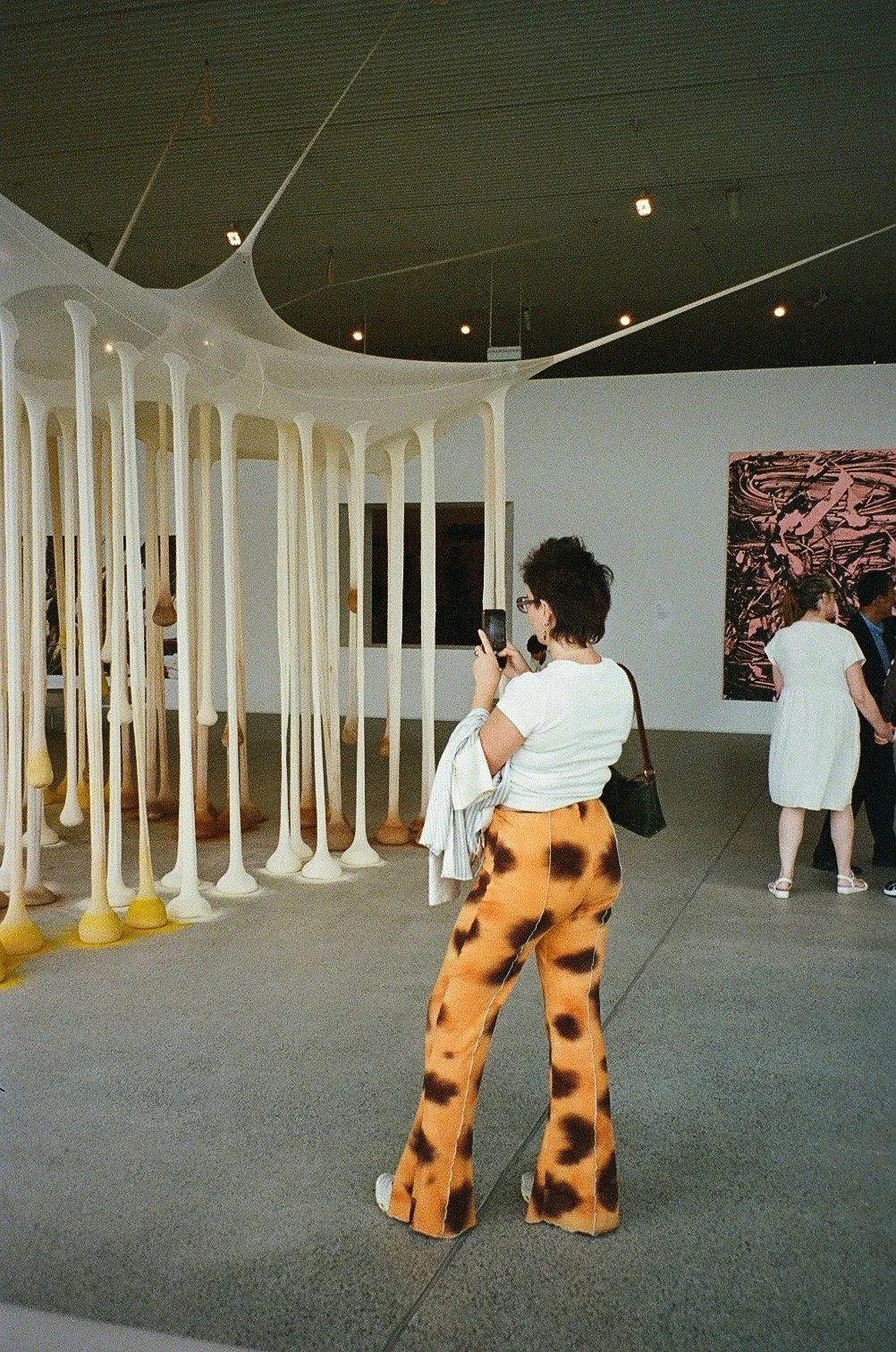
January 3: Just like drops in time, nothing by Ernesto Neto at the Art Gallery of New South Wales. The installation of this 2002 work overtook my senses. For the first time in my life, I smelled an artwork before seeing it. The stockings, filled with spices poured onto the floor, overtaking the space with their smell and colour. Having just been in San Francisco at the SFMoMA days before, I was immediately reminded of Ruth Asawa’s sculptures in the shape and feel of Neto’s installation.
Round 2 of the RMIT grad shows left a lot to be desired. For whatever reason, most works felt like I had seen them before, not in the sense that they felt warmly familiar, but that I was being shown the same exhibition time and again. I’ll also admit I had higher expectations for this post-graduate exhibition. I generally liked most of the work, but not much of it jumped out to me as favourites. Lots of it blended into each other. This could be due to grad show fatigue of sorts? Seeing so much graduating student work in such a short amount of time, it’s impossible to not compare it all to each other.
Sign up for emails
Be the first to know about new reviews.
The current show at Assembly Point has been curated by Lani Seligman & Kiron Robinson, and it moves in relative silence. Heralded by the title of the show ‘masterpiece’, the artists, and curators are named, but no other information is present on the scene. The works themselves aren’t credited individually, there’s no exhibition text, and there’s nothing online I could find about the show. After being initially frustrated about this, as it’s admittedly a bit hard to write about art when you know nothing about it, I came round to liking the lack of information (although I did message one of the artists eventually, just to find out whose work is whose). It allows the work to speak for itself, and feels more like public art than any formal kind of exhibition.